Author

Nelson Steven

Browsing

Fuel management is one of the most significant operational factors in the maritime industry. Ships rely on large quantities of fuel to operate efficiently, and even small discrepancies in fuel quality or quantity can result in financial losses, operational delays, or engine damage. This is why bunker surveys play a vital role in shipping operations, helping ensure transparency, accuracy, and compliance during fuel transactions.

A bunker survey is a specialized inspection process that verifies the quantity and quality of fuel delivered to a vessel. It serves as a safeguard for shipowners, charterers, and operators by reducing the risk of disputes and ensuring proper documentation.

Understanding the Purpose of a Bunker Survey

When fuel is transferred from a supplier to a vessel, there are several variables that can affect the final amount received. Measurement errors, contamination, temperature variations, or procedural inconsistencies may create discrepancies between the delivered and recorded quantities.

A bunker survey involves independent verification before, during, and after the fuel transfer process. Surveyors measure fuel tanks, monitor transfer procedures, and collect samples to confirm compliance with specifications. This process ensures that the receiving party obtains exactly what was agreed upon.

Accurate verification protects both financial interests and operational reliability.

The Importance of Fuel Quality Assurance

Fuel quality is just as important as quantity. Poor-quality fuel can cause engine inefficiency, increased maintenance costs, or even mechanical failures. Contaminants such as water, sediments, or incompatible fuel blends may lead to serious operational issues.

Bunker surveys include sampling procedures that allow laboratory testing of fuel characteristics. These tests confirm whether the fuel meets industry standards and contractual specifications.

Ensuring fuel quality reduces the risk of downtime and helps maintain vessel performance.

Preventing Disputes in Maritime Transactions

Fuel transactions often involve multiple parties, including suppliers, ship operators, and charterers. Without independent verification, disagreements may arise regarding quantity shortages or quality concerns.

Bunker surveys provide documented evidence that supports transparency. Measurements, observations, and test results are recorded professionally, creating a reliable reference in case disputes occur.

This independent documentation helps maintain trust between parties and supports smooth business relationships.

Regulatory Compliance and Industry Standards

The maritime industry operates under strict environmental and safety regulations. Fuel quality and handling procedures must meet international standards to ensure compliance with emission requirements and operational safety.

Bunker surveys help confirm that fuel transactions align with regulatory guidelines. Surveyors are trained to recognize procedural deviations and ensure that industry best practices are followed throughout the transfer process.

Compliance not only protects the environment but also prevents penalties and operational interruptions.

The Role of Professional Surveyors

Conducting a bunker survey requires specialized knowledge and technical expertise. Surveyors must understand fuel measurement techniques, tank calibration, sampling methods, and safety protocols. They also need to interpret data accurately and provide clear reports.

Professional survey companies use standardized procedures and calibrated equipment to ensure precise results. Their independence from suppliers and ship operators strengthens the credibility of the findings.

For maritime stakeholders seeking reliable verification services, Sea Sob bunker survey provides expertise focused on accurate fuel measurement and quality assurance during bunkering operations.

Working with experienced surveyors helps reduce risks and improve operational confidence.

Financial and Operational Benefits

Accurate bunker surveys contribute directly to cost control. Even minor discrepancies in fuel quantity can translate into significant financial losses when dealing with large volumes. Verification ensures that payments reflect the actual fuel received.

Operationally, quality assurance reduces the likelihood of engine problems and unexpected maintenance. Reliable fuel performance supports schedule adherence and improves efficiency across voyages.

These benefits make bunker surveys an essential part of responsible maritime management.

The Future of Fuel Monitoring in Shipping

As the shipping industry evolves toward cleaner fuels and stricter environmental regulations, the importance of accurate fuel monitoring will continue to grow. New fuel types require even greater attention to compatibility and handling procedures.

Bunker surveys will remain a critical tool for ensuring safe transitions and maintaining operational standards. Technology may enhance measurement accuracy, but independent verification will always play a central role.

Final Thoughts

Bunker surveys are essential for maintaining transparency, safety, and efficiency in maritime fuel transactions. By verifying both quantity and quality, they protect financial interests and support reliable vessel operations.

Partnering with experienced survey professionals ensures that fuel management processes remain accurate and compliant. In an industry where precision matters, bunker surveys provide the confidence needed for successful maritime operations.


Usually, I used to treat aeration as a decoration. A few bubbles rising, pleasant sound, nice visual. That was it. If the water appears clear and the filter running is normal, I assume oxygen levels are fine.

Later, I realised how misleading that thinking was:

  • Clear water can still be oxygen-poor
  • Fish often show subtle signs before problems become obvious
  • Aeration and filtration solve very different issues

It is easy to overlook something you fail to see.

I called the professionals at That Pond Guy, who have a lot of exposure to maintain ponds, and they recommended that I use a pond airpump with alarm in our pond. At first, it sounded unnecessary. Why would an air pump need an alert system? But oxygen loss happens quietly. If the pump ever malfunctions, there is no immediate apparent sign.

That Pond Guy explained to me that aeration is essential for fish as well as filtration, and not a secondary feature.

  • Oxygen levels drop quickly when airflow stops
  • Fish distress appears late, not early
  • Silent pump failure can be dangerous

That alarm concept suddenly made sense.

Myth 1 – “My waterfall already adds enough oxygen.”

This one fooled me for years. A waterfall creates movement, noise, and bubbles. Surely that is enough?

Not quite. Waterfalls mostly agitate the surface layer. Deeper parts of the pond remain under-oxygenated.

  • Surface movement does not effectively reach the pond bottom
  • Fish and beneficial bacteria occupy all depths
  • Deep zones benefit more from bottom diffusers

Aeration needs to work throughout the water column.

Myth 2 – “Oxygen is fine if the water is quite clear.”

Clarity has nothing to do with dissolved oxygen. A pond may appear crystal clear and still lack adequate oxygen for fish and bacteria.

I noticed this when fish stayed near the surface despite perfect-looking water.

  • Oxygen is invisible in water
  • Fish behaviour often signals the issue
  • Testing oxygen is more difficult than noticing green water

It is a hidden factor in pond health.

Myth 3 – “One air stone can work for any pond.”

Article image

I once dropped a single air stone into a large pond, watched bubbles rise quickly, and assumed the job was done.

But large bubbles escape too fast to transfer much oxygen.

  • Fine bubbles stay in the water longer, allowing better oxygen absorption
  • Diffuser placement at the bottom improves effectiveness
  • Pond size and depth change aeration needs

Aeration is about efficiency, not bubble quantity.

Myth 4 – “Aeration can help only fish, and not the filter.”

This surprised me the most. The bacteria in the biological filter are aerobic. They need oxygen to break down waste and ammonia effectively.

Low oxygen reduces their performance:

  • Bio bacteria slow down without oxygen
  • Waste processing becomes inefficient
  • Water quality declines gradually

Aeration supports the entire filtration system.

Final thoughts while hearing the pump hum

What used to seem like an extra feature now feels essential. The soft, steady sound of the air pump signals that the pond’s life system is working as it should. Aeration is not for appearance; it plays a vital role in keeping fish, beneficial bacteria, and overall water conditions balanced and healthy.Top of Form

Bottom of Form

Every task that involves handling tools or materials relies on precision and protection. But safety gear is only as good as its fit. Ill-fitting gloves can cause more than discomfort; they can slow down performance or even increase accident risk. A pair that fits well keeps workers efficient and their hands safe from harm.

For many industries, safety gloves in Singapore are now a standard part of daily workwear. From factories to construction sites, these gloves shield workers from cuts, burns, and abrasions while allowing them to maintain control and dexterity. The right fit transforms gloves from a mere requirement into an extension of the hand itself.

The Impact of Fit

When gloves fit too tightly, they restrict blood flow and cause stiffness. When they are too loose, they slide, snag, and interfere with grip. Either way, comfort and safety drop. A proper fit helps maintain grip strength and allows steady handling of small tools and components without unnecessary effort.

Manufacturers design cut resistant gloves in various materials and thickness levels to achieve a balance between flexibility and protection. Fibres such as Kevlar, HPPE, and steel mesh provide durability against sharp edges and heavy contact. A secure fit keeps these layers aligned, ensuring even protection across every part of the hand.

Finding the correct size requires measuring hand width and length accurately. Even minor differences can change comfort and performance. Workers dealing with delicate parts often prefer thinner gloves for freedom of movement, while those in heavy-duty environments rely on thicker, reinforced pairs built for tougher demands.

Materials That Work with You

Modern safety gloves in Singapore combine practicality with comfort. Materials such as nylon, nitrile, and polyurethane offer both flexibility and strength. These fabrics stretch with natural hand movement, preventing tearing and helping workers stay comfortable during long hours.

Some gloves use breathable weaves or ventilated panels to minimise sweating. This improves grip and reduces irritation from moisture build-up. For workers in warmer settings, ventilation plays a major role in keeping focus steady and hands dry.

Meanwhile, cut resistant gloves provide strong protection while remaining flexible. New weaving techniques allow manufacturers to blend tough fibres with softer yarns, producing gloves that move naturally with every task. This flexibility prevents stiffness and keeps the glove feeling natural instead of bulky.

How Fit Affects Safety

Properly fitted gloves reduce the chance of errors caused by poor control. A glove that shifts mid-task can make handling tools more difficult or unpredictable. Consistent fit allows better accuracy and reduces the risk of slipping while carrying heavy or delicate objects.

In environments where sharp tools or machinery are common, cut resistant gloves help prevent serious injuries. They are tested to meet safety standards that measure cut strength, abrasion resistance, and grip performance. When they fit properly, the protective layers function as intended, offering full coverage without gaps or bunching.

Fit also impacts fatigue levels. When workers strain their hands to adjust or hold objects, muscles tire faster. Over time, this can lead to repetitive strain injuries. Gloves that fit correctly support natural motion and promote endurance through every shift.

Balancing Comfort and Function

Comfort doesn’t mean compromising on safety. The best gloves combine both. Modern safety gloves in Singapore come in ergonomic shapes that match the natural curve of the hand. Some feature pre-curved fingers or seamless stitching that reduces friction during movement.

Workers who need reliable protection often favour cut resistant gloves with textured coatings on the palms for improved grip. These coatings make it easier to handle slippery or oily tools without losing control. The result is a safer, more efficient workflow.

Fit should also be revisited regularly. Over time, materials stretch or wear out, reducing the glove’s effectiveness. Periodic replacement ensures consistent protection and comfort, especially in high-use environments.

Keeping Hands in Top Form

The benefits of the right fit extend beyond safety. Workers who use well-fitted gloves experience less hand fatigue and fewer blisters. This not only improves comfort but also reduces downtime caused by injuries or discomfort. A glove that feels natural supports confidence and control across a range of tasks.

Employers can help by providing different glove sizes and types during training. Allowing workers to test several fits encourages better compliance and satisfaction. When workers have input in selecting their gear, they are more likely to use it consistently and correctly.

The Right Fit for Every Task

From heavy-duty jobs to precise assembly work, the ideal glove makes all the difference. Selecting the right size and style ensures that protection works as intended while maintaining flexibility and comfort. A good fit is the simplest way to improve safety without adding cost or complexity.

With options that combine durable materials and ergonomic design, today’s gloves deliver both comfort and reliability. Workers who feel at ease in their equipment perform better and stay protected through every task. Contact SafetySam to find the right fit and reliable safety gloves for every job and every worker.

Luxury yacht rentals maintain comprehensive safety equipment inventories that exceed basic maritime requirements to protect passengers during charter operations. boat rental dubai operators equip vessels with advanced safety systems and emergency response equipment that provide multiple layers of protection throughout charter experiences. These safety standards ensure passenger confidence while maintaining regulatory compliance with international maritime safety protocols.

Life safety essentials

Personal flotation devices represent the most fundamental safety equipment aboard charter yachts, with professional operators maintaining life jackets in multiple sizes to accommodate diverse passenger requirements. Modern yacht life jackets feature automatic inflation systems, built-in whistles, and reflective tape that enhance emergency visibility. Professional crews conduct mandatory safety briefings demonstrating proper life jacket usage and storage locations throughout vessel areas.

Life raft systems provide emergency evacuation capabilities that exceed passenger capacity requirements, ensuring adequate space for all charter guests during catastrophic vessel emergencies. These inflatable craft contain survival supplies, including emergency water, food rations, signalling devices, and first aid materials that sustain passengers during rescue operations. Regular inspection schedules verify life raft functionality and supply freshness according to maritime safety regulations. Emergency position indicating radio beacons automatically transmit distress signals with precise location coordinates when activated during emergencies, operating independently of vessel electrical systems while providing continuous transmission capabilities that guide rescue operations to exact yacht positions.

Communication device standards

Marine radio systems aboard luxury yachts include multiple VHF radios positioned strategically throughout vessels to ensure emergency communication access from various locations during crises. Professional installations feature waterproof handheld backup radios operating when primary systems experience power failures or water damage. Communication protocols encompass coast guard emergency channel monitoring, international distress frequency capabilities for offshore emergencies, weather alert reception systems, and digital selective calling features that automatically transmit vessel identification data.

Private Yacht Charter NYC | Rent Private Boats/Yacht Charters in NYC

Satellite communication systems provide global coverage capabilities that maintain contact with emergency services regardless of distance from shore or cellular tower coverage areas. They allow crew members to coordinate rescue operations or seek medical consultations from shore-based professionals during emergencies. Backup communication devices include emergency cellular boosters and satellite phones that function independently of primary vessel communication systems.

Fire suppression systems

Automatic fire detection systems throughout luxury yachts monitor for smoke, heat, and flame indicators that trigger immediate alarm responses and suppression system activation. Professional installations include smoke detectors in all cabin areas, heat sensors in engine compartments, and flame detectors in galley spaces where cooking activities create fire potential. Detection systems connect to central monitoring panels that display exact fire locations while activating appropriate suppression responses automatically.

Fire extinguisher placement follows strict maritime standards that position appropriate extinguisher types within easy reach of all vessel areas where fire hazards exist. Different extinguisher classifications address specific fire types, including electrical, fuel, and general combustible materials, requiring different suppression agents for effective control. Professional yacht crews receive training in extinguisher operation and fire response procedures that enable rapid emergency response.

Medical emergency equipment

First aid supplies aboard luxury yachts exceed basic requirements to address various medical emergencies that may occur during charter operations far from shore-based medical facilities. Professional medical kits include prescription medications, surgical supplies, and diagnostic equipment that enable crew members to provide advanced first aid while coordinating with medical professionals via satellite communication systems. Medical equipment includes:

  • Automated external defibrillators with voice-guided operation instructions for cardiac emergency response
  • Oxygen therapy equipment, including portable tanks and delivery masks for respiratory emergencies
  • Immobilization devices, including cervical collars and stretchers, for trauma injury management
  • Advanced wound care supplies, including sutures and sterile surgical instruments
  • Prescription medication supplies for common medical conditions and allergic reactions

Professional crew members maintain current certifications in maritime first aid and CPR procedures that enable effective medical response during charter operations. Many luxury yacht operators employ crew members with advanced medical training or maintain contracts with medical professionals who provide remote consultation during medical emergencies.

Concrete and brick components present specific difficulties when taken out of regular residential waste, often the result of building, demolition, or restoration efforts. These heavy and large materials need particular treatment to guarantee environmental compliance as well as safety. Therefore, not only is it a necessity but also a comfort to use expert garbage removal services especially suited for handling such a big volume of trash. These businesses promise that the heavy garbage is moved and handled in compliance with local and national rules since they have the necessary means, vehicles, and knowledge to correctly and successfully manage concrete and brick. Their specific approach guards the cleaned area as well as the surrounding environment. Particularly businesses in the building sector and homes looking for continual junk Removal in shoreline would gain from this information.

Implementing Specialized Tools

Dealing with concrete and brick waste calls for much more than a pickup truck. Professional waste removal firms employ specifically designed instruments designed for heavy lifting and movement of large materials. This covers roll-off containers and heavy-duty dump vehicles, usually skid-steer loaders or mini excavators for more volume. One can also employ instruments such as jackhammers, concrete saws, and specialized dollies for breaking down and moving difficult parts. Appropriate tools ensure that the material might be safely loaded and transported without violating property or generating worker damage. Appropriate tools ensure efficient and safe disposal of even the toughest demolition waste, so this cost is justified.

Following regulations

Dealing with brick and concrete first draws focus on trash disposal compliance. Professional garbage disposal companies know municipal, state, and sometimes federal rules. They promise perfect material sorting, ownership of all necessary licenses, and transportation to approved recycling centers or landfills. Following guidelines helps the property owner to prevent legal issues and significant fines so ensure that the process is compliant all through. Tight application of these regulations guarantees effective junk removal in shoreline.

Waste Environmentally Sensible

By landfilling concrete and brick trash, one lowers dumping capacity, thereby maybe having long-term environmental consequences. One significant concern about the impact of these items on the surroundings is there from landfills in anyplace practical, conscientious waste removal firms give different concrete and brick great value. These materials are highly recyclable; bricks can usually be kept for use or ground down for fill; concrete may be crushed and used as road base or aggregate for the next building projects. By reducing the demand for virgin materials and therefore the environmental impact, professional services working with recycling facilities help to encourage sustainable practices. This commitment to recycling by actionjunkhauling suits more general goals of environmental preservation.

Simplified Procedures: Benefits

Using a professional service for brick and concrete removal really helps to simplify things. Professionals run everything instead of people or establishing teams losing valuable time and effort on waste control. This involves careful editing, loading, disposal, and heavy lifting. This efficacy allows project managers and homeowners to focus on other aspects of their work or remodeling, therefore saving time, effort, and risk of damage. The simplicity of a dedicated service such as actionjunkhauling immediately yields a faster, less strenuous cleanup experience.

In today’s fast-paced and interconnected world, elevating customer experience has become one of the most critical differentiators for businesses. No longer is it enough to offer a good product or service. Success now hinges on how well a company meets and exceeds customer expectations at every touchpoint. As industries evolve and competition intensifies, the companies that prioritize customer experience are the ones most likely to build loyalty, drive growth, and stand the test of time.

Understanding the Modern Customer

Today’s customers are more informed, empowered, and discerning than ever before. Easy access to information allows consumers to compare brands, read reviews, and switch allegiance if their expectations are not met. They seek not only quality but also seamless interactions, personalized attention, and emotional connection. Elevating customer experience means recognizing that buyers are no longer passive recipients—they are active participants in shaping brand narratives.

A critical first step in improving customer experience is understanding customer journeys. Mapping out these journeys helps businesses see things from the customer’s perspective, identifying pain points and opportunities for enhancement. By adopting a customer-centric mindset, companies can design services and interactions that feel intuitive, responsive, and meaningful.

The Emotional Dimension of Customer Experience

While efficiency and convenience are important, emotional engagement often makes the most lasting impact. Research consistently shows that customers who feel an emotional connection to a brand are far more likely to remain loyal and recommend the brand to others.

Elevating customer experience, therefore, involves creating emotional resonance. Brands achieve this by being authentic, transparent, and empathetic. Whether it’s resolving an issue with genuine concern or celebrating customer milestones, businesses that connect emotionally position themselves for enduring success.

Training employees to exhibit empathy, developing emotionally intelligent communication strategies, and offering personalized recognition are all ways businesses can create stronger emotional bonds with their clientele.

Personalization: Meeting Customers Where They Are

Generic approaches are quickly becoming obsolete. Personalization is no longer a luxury; it is an expectation. Customers want to feel seen, understood, and valued. This can range from addressing customers by name in communications to offering product recommendations based on past behavior.

However, personalization must be balanced carefully with privacy concerns. Transparent data practices and respectful use of information are crucial. Customers are willing to share their preferences when they trust that businesses will use the data responsibly to improve their experience.

Investing in advanced customer relationship management (CRM) systems, utilizing data analytics to glean insights, and empowering front-line employees with information to better serve individual needs are effective ways of elevating customer experience through personalization.

The Role of Technology in Customer Experience

Technology is both an enabler and a disruptor of customer experience. Tools such as artificial intelligence, chatbots, self-service portals, and mobile apps can dramatically enhance convenience and accessibility. They allow businesses to offer 24/7 support, instantaneous information, and frictionless transactions.

Yet technology must enhance, not replace, the human touch. Automated systems that fail to escalate complex issues to human representatives can lead to frustration. Smart companies deploy technology strategically—to streamline routine interactions while preserving opportunities for personalized, human engagement when it matters most.

Omnichannel integration is another critical technological strategy. Customers expect consistent experiences across all channels—whether in-store, online, via mobile apps, or on social media. Ensuring that each interaction is connected and coherent strengthens trust and satisfaction.

Proactive Service: Anticipating Needs Before They Arise

A hallmark of excellent customer experience is anticipating needs rather than merely reacting to them. Proactive service transforms good experiences into memorable ones. This could involve notifying customers of a potential issue before they encounter it, suggesting helpful add-ons based on their purchase history, or simply reaching out to gather feedback.

Predictive analytics and machine learning play a growing role in proactive service strategies. By analyzing patterns and behaviors, companies can forecast future needs and tailor their offerings accordingly.

Moreover, proactive communication—updating customers about their order status, explaining changes, or even apologizing before a problem escalates—goes a long way in building credibility and loyalty.

Employee Engagement: The Hidden Driver of Customer Experience

Employees are the face of the company. Their attitude, knowledge, and commitment directly impact how customers perceive the brand. Therefore, elevating customer experience must begin internally by cultivating a positive employee experience.

Engaged employees are more likely to go above and beyond for customers. They feel invested in the company’s mission and take pride in delivering outstanding service. Businesses that invest in employee development, recognize achievements, and foster inclusive, supportive cultures reap the rewards in customer satisfaction.

Leadership plays a pivotal role. Managers who model customer-centric values, support frontline staff, and provide clear communication set the tone for an organizational culture centered around service excellence.

Listening and Adapting: The Power of Customer Feedback

Continuous improvement is essential to maintaining a high level of customer experience. Feedback is a vital tool in this process. Customers offer invaluable insights into what is working and what needs adjustment.

Gathering feedback should be systematic and multi-channeled—through surveys, reviews, focus groups, and social media monitoring. However, the true power lies not just in collecting feedback, but in acting on it.

Companies that close the feedback loop—informing customers how their input led to specific improvements—demonstrate respect and responsiveness. This enhances loyalty and encourages continued engagement.

Moreover, feedback should not only be used to fix problems but to inspire innovation. New product features, service offerings, or entirely new approaches often originate from listening closely to customer suggestions and concerns.

Creating Memorable Moments

In a crowded marketplace, memorable moments set brands apart. These are the small but powerful gestures that delight customers and exceed their expectations.

Whether it’s a handwritten thank-you note, a surprise upgrade, or resolving an issue faster than anticipated, small acts of thoughtfulness can turn satisfied customers into brand advocates. Companies that empower their employees to create these moments organically often outperform those that rely solely on rigid scripts or policies.

Memorable moments also build emotional capital. They are shared widely—both through word-of-mouth and on social media—helping brands extend their reach and reputation organically.

The Future of Customer Experience

Looking ahead, the importance of elevating customer experience will only grow. Emerging technologies like augmented reality, blockchain, and hyper-personalization promise new opportunities to innovate customer interactions.

However, the fundamental principles will remain unchanged: empathy, attentiveness, responsiveness, and authenticity will continue to form the foundation of exceptional customer experiences.

Sustainability is also becoming a key consideration. Customers increasingly expect companies to demonstrate ethical practices, social responsibility, and environmental stewardship. Businesses that integrate these values into their customer experience strategies will be better positioned to win and retain trust.

Finally, adaptability will be crucial. In an unpredictable world, businesses must stay flexible, embracing change and continually reimagining how they serve their customers.

Conclusion

Elevating customer experience is not a one-time initiative but an ongoing commitment. It requires businesses to view every interaction as an opportunity to create value, build relationships, and differentiate themselves.

By understanding customers deeply, fostering emotional connections, embracing technology thoughtfully, empowering employees, and continually seeking feedback, companies can craft experiences that resonate and endure.

In the end, businesses that master the art and science of customer experience are not just building better brands—they are building legacies.

Looking for an event company Singapore that can transform your vision into reality? Whether you’re planning a corporate extravaganza, a milestone celebration, or an international conference, Singapore’s event planning landscape is a fascinating blend of efficiency, creativity, and that peculiarly Singaporean ability to make the impossible seem rather routine.

The Art of Event Planning in the Lion City

I must say, there’s something rather marvellous about how Singapore approaches events. It’s rather like watching a colony of extraordinarily well-dressed ants orchestrate a picnic for the Queen – everything moves with precise coordination, yet somehow maintains an air of effortless grace. According to the Singapore Tourism Board, the city-state hosted over 2,500 business events in 2023, contributing approximately S$3.7 billion to the economy. Not bad for a country you could accidentally drive through while searching for your spectacles.

Why Singapore’s Event Scene Stands Out

The thing about Singapore’s event companies is that they operate in what I like to call the ‘sweet spot’ of global events. Consider these rather impressive attributes:

  • Strategic Location: Nestled like a well-placed canapé between East and West, Singapore serves as a hub for international events. With Changi Airport handling over 68 million passengers annually (pre-pandemic figures), you’re never more than a direct flight away from most major cities.
  • Infrastructure that Makes Other Cities Weep: The country boasts venues that would make Roman emperors feel rather inadequate. Marina Bay Sands alone offers over 250,000 square feet of meeting space, which is roughly the size of four football fields or, if you prefer, 250,000 actual square feet.
  • Technology Integration: Singaporean event companies have embraced technology with the enthusiasm of a child discovering sugar. From holographic displays to AI-powered registration systems, they’re rather keen on making your event look like it’s been beamed in from the future.

The Quirky Side of Singapore Events

One can’t help but notice the delightfully peculiar aspects of planning events in Singapore. The weather, for instance, maintains a remarkable consistency in its attempt to turn everyone into a human soup. This has led to some rather ingenious indoor-outdoor hybrid venues, where air-conditioning is treated with the reverence usually reserved for religious artifacts.

Budget Considerations (Or Why Your Wallet Might Need a Lie-Down)

Now, let’s address the elephant in the room, or rather, the price tag that might make your accountant need a stiff drink. Singapore consistently ranks among the world’s most expensive cities, and its event industry reflects this with gusto. However, consider these statistics from the Singapore Business Federation:

  • Average ROI for corporate events: 127%
  • Client satisfaction rate: 92%
  • Repeat client booking rate: 78%

Rather impressive numbers, wouldn’t you say? Like getting change from a five-dollar note and finding it’s somehow multiplied in your pocket.

Navigating the Administrative Maze

One simply cannot discuss events in Singapore without mentioning the paperwork. Oh, the paperwork! It’s rather like trying to solve a Rubik’s cube while blindfolded – technically possible but requiring expert guidance. This is where local event companies truly earn their stripes, navigating permits and licenses with the skill of a seasoned diplomat at a buffet table.

The Future of Events

The landscape of Singapore’s event industry is evolving faster than a chameleon on a disco dance floor. With the integration of virtual and hybrid elements, sustainability initiatives (Singapore aims to reduce its carbon emissions by 36% by 2030), and increasingly sophisticated client demands, the industry is in a constant state of reinvention.

As we wrap up this whimsical journey through Singapore’s event planning landscape, it’s worth noting that success in this field requires a unique blend of precision, creativity, and the ability to remain calm while juggling flaming torches (metaphorically speaking, although I wouldn’t put it past some event companies). For those seeking to create memorable experiences in the Lion City, partnering with a professional event company Singapore might just be the difference between a good event and one that people talk about for years to come.

Is your business prepared to deal with a fire emergency? If yes, we are confident that you have likely enlisted the services of Fire Wardens to ensure the safety of your place.

A Fire Warden is responsible for implementing the necessary fire safety measures to prevent a fire, maintaining workplace continuity, and preparing for a fire emergency. No fire emergency plan is complete without fire wardens, so understanding their responsibilities is crucial.

Here, we discuss their responsibilities in detail.

What is a Fire Warden, and What Does Fire Warden Training Involve?

Non-domestic buildings must have a designated “responsible person” for the premises. In the case of a workplace, this role may be filled by a building manager, landlord, or supervisor. It is their responsibility to ensure that the building is completely fire-safe and complies with all laws, and they must appoint fire wardens to assist them with this task. All fire wardens must complete fire warden training to ensure they understand their responsibilities and are aware of potential hazards within the building.

It is completely untrue that a fire warden’s responsibilities only start during a fire. Fire wardens, also known as fire marshals, play a vital role in the daily management of the building and usually fall into one of two categories: routine or emergency.

Emergency Planning and Drills

One of the main duties of a fire warden is to assist in developing and executing a workplace fire emergency plan. This plan describes what to do in the case of a fire, including evacuation procedures and assembly points. They also organize and participate in regular fire drills to make sure that every employee is aware of the evacuation procedure. The responsibilities include:

  • Create clear and effective evacuation routes and ensure they are free from obstacles.
  • Identify and designate secure meeting spots where staff members can gather during an evacuation.
  • Organize and supervise regular fire drills to improve the evacuation procedure.

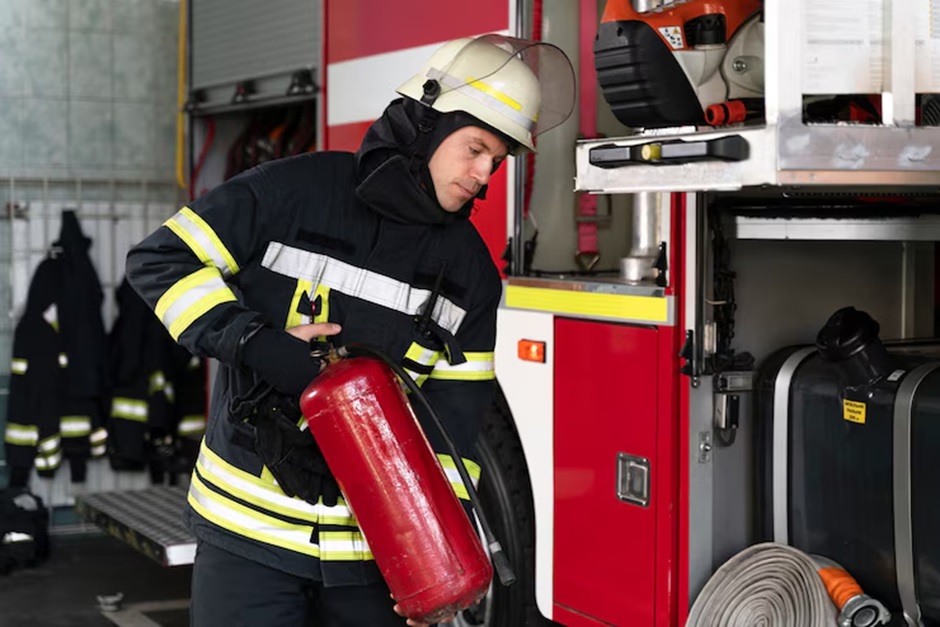
Fire Warden

Fire Extinguishers and Alarm Checking

The fire alarms have been found to be malfunctioning on several occasions, and the fire extinguishers are present at places that are inaccessible when a fire breaks out. A fire warden’s primary responsibility is ensuring the fire alarms are working properly. If not, he may proceed with the necessary steps.

Additionally, he verifies whether or not fire extinguishers receive regular service. He completes this task once a month.

Safe Evacuation of Workers

Fire wardens are responsible for safely evacuating workers and visitors from a workplace after a fire alarm is sounded.

During an evacuation, a fire warden needs to:

  • Encourage everyone to evacuate the building using the proper channels and exits (and not inappropriate exits such as lifts).
  • Verify all accessible areas in the vicinity, including the bathroom, to make sure everyone has evacuated. This should be done as they leave the building so the fire warden avoids endangering themselves by returning to the evacuation area.
  • Shut the doors to help to isolate the fire.
  • Direct everyone to the assembly place and assist in checking that everyone has arrived at their destination safely.

So, fire wardens should be granted full authority to conduct evacuations, and workers should be informed of this authority.

Fire Wardens Indulge all People in Fire Safety

Indulging all people in fire safety is crucial to guarantee maximum protection from fire hazards.

Interactions between fire wardens and residents include:

  • Raising awareness among them about workplace fire hazards, kinds of fire and fire extinguishers, and how to utilize an extinguisher.
  • Educating employees on responding in an emergency and designating distinct roles to different people.
  • Ensuring all workers fulfill their obligations and are held responsible during an evacuation.
  • Ensuring that everyone receives fire safety training. It can be updated annually.
  • Preparing all people for emergencies and aiding those with specific requirements, such as a wheelchair user, to evacuate.

Data analysis plays a crucial role in enhancing the effectiveness of automated trading systems. By analyzing vast amounts of past trading information, developers can identify recurring patterns, trends, and correlations immediately apparent to the human eye. This deep dive into historical data allows for the creation of more accurate predictive models, enabling trading bots to make better-informed decisions.

Backtesting and optimization

Backtesting is a critical component of data analysis in the context of trading bot development. This process involves running a trading strategy on historical data to evaluate its potential performance. Through backtesting, developers can assess how well a bot would have performed in past market conditions, helping to identify strengths and weaknesses in the strategy.

Fine-tuning parameters for maximum efficiency

Data analysis enables developers to fine-tune the parameters of their trading bots for maximum efficiency. By examining the results of backtests and live trading sessions, analysts can identify which variables have the most significant impact on performance. This information is then used to adjust parameters such as entry and exit points, position sizing, and risk management rules. A powerful data analysis and parameter optimization tool can be found at trading robot. By leveraging these resources, traders can enhance their bots’ performance and adapt to changing market conditions more effectively.

Adapting to market volatility

Market volatility through data analysis

Market volatility is a constant challenge for trading bots. The analysis of data helps developers quantify and understand this volatility to build more robust systems that can adapt to changing market conditions. By analyzing volatility patterns, bots can be programmed to adjust their trading strategies accordingly, reducing risk during highly volatile periods.

Real-time data processing and decision-making

The ability to process and analyze real-time market data is crucial for trading bot performance. Advanced analytical techniques allow bots to quickly interpret incoming data streams and split-second decisions based on current market conditions. This real-time analysis enables trading bots to react swiftly to sudden market shifts, capitalizing on short-lived opportunities or avoiding significant losses.

Machine learning and predictive analytics

Enhancing prediction accuracy

Machine learning algorithms have revolutionized the field of data analysis in trading bot development. These sophisticated tools analyze vast amounts of data to identify complex patterns and relationships with traditional statistical misses. By incorporating machine learning techniques, trading bots continually improve their predictive capabilities, leading to more accurate trading decisions over time.

Sentiment analysis and alternative data sources

Data analysis in trading bot performance extends beyond traditional market data. Sentiment analysis of news articles, social media posts, and other alternative data sources provides additional insights to inform trading decisions. By incorporating these diverse data streams, trading bots gain a more comprehensive view of market dynamics, potentially leading to improved performance.

Continuous improvement through performance monitoring

Tracking key performance indicators

Ongoing data analysis is crucial for monitoring and improving trading bot performance over time. By tracking key performance indicators such as win rate, profit factor, and maximum drawdown, developers can identify areas for improvement and make necessary adjustments to the bot’s algorithms.

Adapting to changing market regimes

Financial markets are constantly evolving, with new trends and relationships emerging over time. Continuous data analysis allows trading bots to adapt to these changing market regimes. By regularly reassessing market conditions and updating their strategies accordingly, bots can maintain their edge in dynamic trading environments.

As winter approaches, municipalities face the critical task of preparing for snow and ice to ensure public safety and maintain essential services. Effective pre-snow preparations can prevent accidents, minimize disruptions, and enhance overall community resilience. Here are essential safety measures municipalities should implement before snowing:

Develop and Update Snow Removal Plans

  • Comprehensive Snow Removal Plan: Establish a detailed snow removal strategy that includes priorities for clearing major roads, secondary streets, sidewalks, and public spaces. Define clear protocols for plowing, salting, and sanding.
  • Resource Allocation: Ensure that resources, including personnel, equipment, and materials, are allocated according to the plan. Update the plan annually to reflect changes in infrastructure, traffic patterns, and community needs.

Inspect and Maintain Equipment

  • Pre-Season Checks: Conduct thorough inspections and maintenance of snow removal equipment such as plows, salt spreaders, and snow blowers. Replace worn-out parts, check fluid levels, and ensure that all equipment is in good working condition.
  • Emergency Repairs: Establish a system for quick repairs and replacements in case of equipment failure during a snow event. Keep spare parts and tools readily available.

Stockpile Supplies

  • De-Icing Materials: Stockpile essential de-icing materials such as salt, sand, and calcium chloride. Ensure adequate storage to cover the anticipated needs for the winter season.
  • Snow Removal Tools: Maintain an inventory of additional snow removal tools and supplies, including shovels, brooms, and spreaders, to handle unexpected conditions or equipment shortages.

Train and Prepare Personnel

  • Training Programs: Provide training for snow removal crews on operating equipment safely, handling hazardous conditions, and implementing snow removal protocols. Regularly review and practice procedures. You can also hire snow removal services for businesses and municipalities at whiteoutgroup.ca.
  • Emergency Response: Prepare personnel for emergency situations by conducting drills and ensuring they are familiar with protocols for extreme weather conditions.

snow removal services

Implement Communication Strategies

  • Public Notification: Set up systems to notify the public about snow removal schedules, road closures, and safety information. Utilize multiple channels such as social media, local news, and community bulletin boards.
  • Internal Communication: Ensure that internal communication systems are in place to coordinate between different departments and teams involved in snow management.

Prepare Roadways and Public Spaces

  • Clearing Obstacles: Remove any potential obstacles from roadways, sidewalks, and public spaces that could hinder snow removal efforts. This includes debris, parked vehicles, and unauthorized structures.
  • Signage and Marking: Install or update signage and road markings to improve visibility and guide snow removal operations. This helps ensure that key areas are cleared effectively and safely.
  1. Monitor Weather Conditions
  • Weather Forecasts: Regularly monitor weather forecasts and alerts to anticipate snow events and prepare accordingly. Use weather monitoring tools and services to stay informed about changing conditions.
  • Pre-Event Assessments: Conduct pre-event assessments to evaluate road conditions, potential problem areas, and resource needs based on forecasted weather.

By implementing these safety measures before snowing, municipalities can better manage winter weather challenges, protect public safety, and ensure efficient operations.