Tag

quickly

Browsing

Drafting an enforceable NDA in a New York employment settlement has gotten harder every year since 2018, and the November 17, 2023 amendments to General Obligations Law § 5-336 made the standard form NDA unenforceable in a meaningful percentage of cases. Most employers still use settlement and separation agreements that have not been updated since the 2019 amendments, and those documents now contain provisions that void the entire release if the matter involves discrimination, harassment, or retaliation. A New York business law attorney reviewing employment settlement agreements regularly finds three or four problems in the same template that worked fine four years ago. The cleanup is straightforward when caught before signing and irreversible when caught after.

Here is what the layered restrictions actually require, where the drafting traps sit, and what an updated template should look like.

The Two Statutes That Govern NY Employment NDAs

Two statutes, working together, control non-disclosure provisions in agreements resolving employment discrimination claims in New York.

General Obligations Law § 5-336 governs pre-litigation settlements. Originally enacted in 2018 to address sexual harassment specifically, expanded in 2019 to cover all employment discrimination claims, and amended again in November 2023 to cover harassment, retaliation, and independent contractor relationships, the statute prohibits an employer from including a confidentiality provision that would prevent disclosure of the underlying facts and circumstances of the claim, unless confidentiality is the complainant’s preference.

CPLR § 5003-b governs settlements reached after a lawsuit has been filed. The same general restrictions apply, with one critical difference: the 21-day consideration period is not waivable in court-filed cases, while it is waivable in pre-litigation settlements following the 2023 amendments.

The distinction matters because most employers still treat these as a single regime. They are not. An agreement signed pre-litigation under § 5-336 looks different from one signed after a complaint is filed under CPLR § 5003-b, and the wrong assumption about which regime applies produces unenforceable agreements.

The 21-Day Period and the 7-Day Revocation Window

When an employer wants to include a confidentiality provision in a settlement of a discrimination, harassment, or retaliation claim, the complainant must be given:

  • A written confidentiality provision identifying the terms
  • Up to 21 days to consider the confidentiality provision (waivable pre-litigation, not waivable in court-filed cases)
  • A separate 7-day revocation period after signing, during which the complainant can rescind the agreement

The 7-day revocation period is not waivable in either context. An NDA signed today cannot take effect for at least seven days, and the agreement is not finalized until the revocation window passes.

This is where pre-litigation settlements have gained meaningful flexibility. Under the original 2018 statute and through 2023, a complainant had to wait the full 21 days before signing, which meant a settlement could not be finalized for at least 28 days. Under the November 2023 amendments, the complainant can sign immediately if they choose, and only the 7-day revocation period remains. For employers trying to close out a pre-litigation matter quickly, that change matters.

The Three New Prohibitions That Void the Release

The November 2023 amendments added § 5-336(3), which makes any release agreement unenforceable if it contains any of three specific provisions when the factual foundation involves unlawful discrimination, harassment, or retaliation.

The prohibited provisions are:

  • A liquidated damages provision tied to breach of a non-disclosure or non-disparagement clause
  • A forfeiture provision requiring the complainant to repay or forfeit any portion of the settlement consideration for breach of a non-disclosure or non-disparagement clause
  • An affirmative statement, assertion, or disclaimer by the complainant that they were not subject to unlawful discrimination, harassment, or retaliation

Every one of these provisions appears in standard employment settlement templates that predate the amendments. Liquidated damages clauses tied to confidentiality breaches were drafted into agreements as a matter of course, because actual damages for an NDA breach are notoriously hard to prove. Forfeiture-of-consideration clauses were the most common workaround, allowing the employer to claw back the settlement payment if the complainant talked. The “no discrimination” affirmation was a routine recital used to defeat any later claim by the complainant that the conduct actually occurred.

All three are now disqualifying. Including any one of them does not just make that clause unenforceable. It makes the entire release unenforceable, which means the employer paid the settlement amount and got nothing in exchange.

What a New York Business Law Attorney Drafts Instead

The amendments did not eliminate confidentiality protection. They constrained the enforcement mechanisms.

Employers can still include a non-disclosure provision when it reflects the complainant’s preference, set forth in writing, with the required consideration and revocation periods. Employers can pursue actual damages for breach of an NDA, drafted with appropriate language preserving that remedy. Employers can include reciprocal non-disparagement provisions, although these face their own restrictions in some contexts. Employers can include carve-outs from confidentiality permitting the complainant to discuss the underlying facts with the EEOC, the New York State Division of Human Rights, the New York City Commission on Human Rights, the New York Attorney General (added in 2023), and the complainant’s own attorney.

The required carve-out language has expanded with the 2023 amendments. The Attorney General must now be specifically identified as a permitted recipient of information that would otherwise be subject to the NDA. Older templates that named only the EEOC and state and local human rights agencies are out of compliance with the current statute.

Independent contractors are now covered. Settlement agreements with 1099 workers were previously outside the statute and treated like ordinary commercial NDAs. The 2023 amendments closed that gap, and any settlement with a freelance consultant, contractor, or one-person LLC alleging discrimination, harassment, or retaliation is now subject to the same restrictions as an employee settlement.

Separation Agreements Versus Settlement Agreements

A specific question that keeps coming up is whether the 2023 amendments apply to standard separation agreements that release unasserted claims rather than resolving an actual complaint.

The statute uses the term “complainant,” and the legislative history focuses on settlements resolving identified claims. The stronger reading is that ordinary separation agreements releasing unasserted claims are outside the scope of the new restrictions, although they remain subject to the broader requirements of GOL § 5-336 if they contain confidentiality provisions covering discrimination, harassment, or retaliation conduct.

This is one of the open questions the courts will work out over the next several years. Until they do, the conservative approach is to draft separation agreements as if the restrictions apply, particularly for departures connected to any actual or threatened complaint of discrimination, harassment, or retaliation.

A Compliance Audit Worth Running

Companies using New York settlement and separation agreement templates should pull every template currently in use and check for several specific problems.

Verify whether liquidated damages provisions for NDA or non-disparagement breaches still appear. If they do, the agreement is voidable under the 2023 amendments where the underlying claims involve discrimination, harassment, or retaliation. Verify whether forfeiture-of-consideration clauses appear. Same risk. Check for affirmative statements by the employee that they were not subject to unlawful discrimination, harassment, or retaliation. This was the most common drafting recital in pre-2023 templates, and it now disqualifies the release. Confirm that the carve-out language includes the New York Attorney General. Verify the document distinguishes pre-litigation from post-filing settlements and applies the correct consideration and revocation rules.

Independent contractor settlement and separation templates need the same review. They were previously outside the statute and likely have not been touched.

When to Bring in a New York Business Law Attorney

NDA drafting in New York is a meaningfully different exercise than it was four years ago, and the 2023 amendments are not the last changes the legislature is likely to make. A New York business law attorney updating settlement and separation templates can identify the disqualifying provisions, replace them with enforceable alternatives, and align the document workflow with the timing rules under both § 5-336 and CPLR § 5003-b.

The Mundaca Law Firm advises New York employers on settlement and separation agreements, employment compliance, and the broader employment law issues that surface alongside them. If your settlement and separation templates have not been reviewed under the November 2023 amendments and the current statutory framework, an audit before the next dispute is materially less expensive than discovering an unenforceable release after the settlement payment has gone out.

A fresh coat of paint can completely transform a space, but only when it’s done right. Uneven layers, visible streaks, and poor surface preparation can quickly turn a simple upgrade into a disappointing result. That’s why choosing the right professionals is not just important, it’s essential.

Instead of focusing only on cost or availability, it’s worth looking deeper into what truly defines quality workmanship.

The First Impression Starts with Detail

Painting is often seen as a finishing touch, but it’s one of the most visible elements of any space. Whether it’s a home or a commercial property, the final look depends heavily on attention to detail.

Experienced painters understand that preparation is just as important as the final coat. From smoothing surfaces to applying the right primers, every step contributes to a flawless finish.

Beyond the Brush: Preparation Matters

A common misconception is that painting begins with color selection. In truth, it starts long before that.

Professional painters focus on:

  • Cleaning and prepping surfaces
  • Repairing cracks or imperfections
  • Ensuring proper adhesion

Skipping these steps can lead to peeling, uneven textures, and reduced durability. Proper preparation ensures that the results not only look good but also last longer.

Precision in Every Stroke

Quality painting is about consistency. Clean edges, even coverage, and smooth finishes require skill and experience.

Professionals use techniques that ensure:

  • Uniform application
  • No visible brush marks or roller lines
  • Sharp, clean boundaries between colors

This level of precision is what separates average work from truly professional results.

Choosing the Right Materials

Not all paints and tools are the same. The quality of materials like NC Paint and PowerWash can significantly impact the outcome.

Professionals select products based on:

  • Surface type
  • Environmental conditions
  • Desired finish

Using the right materials ensures better coverage, durability, and overall appearance.

Time Efficiency Without Compromise

While speed is important, it should never come at the expense of quality. Skilled professionals know how to balance efficiency with attention to detail.

They follow structured processes that allow them to complete projects on time while maintaining high standards. This ensures that you get the best results without unnecessary delays.

Long-Term Value Over Short-Term Savings

Choosing the lowest-cost option may seem appealing, but it often leads to additional expenses later. Poor-quality work may require frequent touch-ups or complete rework.

Investing in experienced professionals ensures that the job is done right the first time, saving both time and money in the long run.

The Difference You Can See

A well-executed paint job is immediately noticeable. It enhances the look of a space, adds value, and creates a lasting impression.

By choosing the right professionals, you’re not just improving a surface, you’re elevating the entire environment. And when every detail is handled with care, the results speak for themselves.

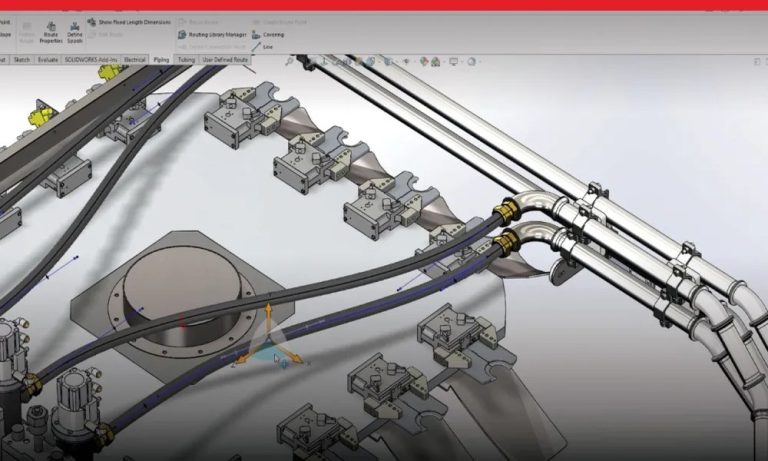
Once you’ve mastered the basics, taking your skills further with an advanced SolidWorks course can unlock powerful tools that elevate your design capabilities. These features go beyond simple modeling, helping engineers and designers handle complex projects with precision and efficiency. Here are ten key features you can expect to learn.

1. Advanced Part Modeling

In an advanced SolidWorks course, you’ll explore complex modeling techniques such as multi-body parts, lofts, sweeps, and boundary features. These tools allow you to create intricate geometries that are often required in real-world applications.

2. Surface Modeling

Surface modeling is essential for designing organic shapes and smooth contours. You’ll learn how to create and manipulate surfaces, then convert them into solid models for production-ready designs.

3. Large Assembly Management

Handling large assemblies efficiently is a critical skill. SolidWorks provides tools like lightweight components and speed optimization techniques to help you manage complex assemblies without slowing down your system.

4. SolidWorks Simulation

Simulation tools allow you to test your designs under real-world conditions. An advanced SolidWorks course teaches how to analyze stress, motion, and thermal behavior, reducing the need for physical prototypes.

5. Sheet Metal Design

You’ll learn how to design sheet metal components, including bends, flanges, and flat patterns. This feature is widely used in manufacturing and fabrication industries.

6. Weldments and Structural Design

SolidWorks includes tools for creating structural frameworks using weldments. This is particularly useful for industries that involve frames, supports, and large mechanical structures.

7. Design Automation

Automation features such as configurations and design tables help you create multiple variations of a model quickly. This saves time and ensures consistency across designs.

8. Product Data Management (PDM)

An advanced course introduces you to PDM systems, which help manage files, track revisions, and improve collaboration within teams. This is essential for maintaining organization in professional environments.

9. Rendering and Visualization

Creating realistic images of your designs is important for presentations and marketing. SolidWorks includes rendering tools that allow you to apply materials, lighting, and textures for high-quality visuals.

10. Advanced Drawings and Documentation

You’ll also refine your skills in creating detailed technical drawings, including complex annotations and bill of materials. Clear documentation is critical for manufacturing and communication.

Final Thoughts

An advanced SolidWorks course equips you with the tools needed to handle complex engineering challenges. By mastering these features, you can use SolidWorks more efficiently, improve design quality, and position yourself as a highly skilled professional in the industry.

A guide for employment law practices and HR legal advisers

Employment law advice is sought by two very different audiences: individuals facing workplace difficulties and businesses seeking to manage their employment obligations. Both groups begin their search online, and for employment law solicitors, appearing prominently for the searches each group makes is the primary route to a steady flow of new instructions.

This is a market where timing is critical. An employee who has just received a settlement agreement has days to get advice. An employer facing a tribunal claim needs help urgently. Being visible in search at these moments of acute need is enormously valuable.

Individual Employee Searches

Employees searching for employment law advice typically do so in the context of a specific problem: unfair dismissal, redundancy, discrimination, settlement agreements or breach of contract. These are emotionally charged searches made by people who feel wronged and who are looking for someone who can help them understand their options quickly.

Content that addresses these specific situations clearly and empathetically, without straying into regulated advice territory, builds trust and encourages enquiries from people who might otherwise feel the cost of a solicitor is prohibitive.

Employer And HR Searches

Employers searching for employment law advice have different concerns: managing a disciplinary process correctly, responding to a tribunal claim, updating contracts and policies or navigating a redundancy process. These searches require a different tone and different content, emphasising commercial pragmatism and risk management alongside legal expertise.

For smaller employment law practices and boutique firms competing against larger corporate law brands, investing in affordable SEO that targets both employee and employer searches in their operating area is the most effective way to build a consistent pipeline of instructions.

Settlement Agreement Expertise

Settlement agreement advice is one of the highest-volume individual employment law services, and searches for it often come with a degree of urgency given the short timeframes involved. A practice with strong visibility for settlement agreement searches can build a substantial, steady flow of work from this one specialism alone.

Faqs And Accessible Information

Employment law is complex but the questions people search are often quite straightforward: “can I be dismissed while on maternity leave,” “what is the unfair dismissal time limit” or “how much redundancy pay am I entitled to.” Answering these questions accurately and accessibly in blog or FAQ content attracts a broad range of potential clients and builds the credibility that converts readers into enquirers.

Reviews And The Personal Dimension

Employment law matters are often deeply personal, particularly for individuals. Reviews that describe a solicitor who explained everything clearly, fought for their client effectively and made a stressful process more manageable carry tremendous weight for someone searching for advice in a difficult situation.

There’s a moment in every buying journey where reading feels like effort. At that point, shoppers look for something easier, faster, and more convincing. That’s exactly where video steps in. Sellers who understand how to use registry product videos tap into a different kind of engagementone that doesn’t rely on long explanations.

This isn’t about adding motion to your listing. It’s about changing how your product is experienced.

The Shift from Information to Demonstration

Text explains. Images suggest. Video proves.

A customer might read about durability or performance but seeing it in action removes doubt instantly. This shift from telling to showing creates a stronger sense of confidence, especially for products that benefit from demonstration.

With Amazon brand registry product videos, sellers can move beyond static communication and create a dynamic presentation that answers questions before they are even asked.

Building Trust Without Saying a Word

Trust is often built in subtle ways. A well-made video signals professionalism, attention to detail, and product reliability.

Shoppers notice:

  • Smooth transitions and clear visuals
  • Real-life usage instead of staged perfection
  • Consistency with the rest of the listing

These elements create an impression that the productand the brand behind itcan be trusted. The customer doesn’t need to analyse it; they feel it.

The Role of Video in Reducing Hesitation

Every buyer carries small uncertainties. Will it work as expected? Is it worth the price? Will it match the description?

Video addresses these concerns naturally. Instead of reading multiple sections, the customer can watch a short clip and quickly understand the product’s value.

This reduces hesitation, shortens decision time, and increases the likelihood of conversion.

Not All Videos Create Impact

Uploading a video is easy. Creating one that influences decisions is different.

Videos that perform well tend to:

  • Focus on one clear message rather than multiple ideas
  • Show the product in use, not just from different angles
  • Keep the viewer engaged without unnecessary length

The goal is clarity, not complexity. A simple, focused video often outperforms a longer, overly detailed one.

Where Video Fits in the Customer Journey

A product video is not the first interactionit’s a reinforcing one. By the time a shopper watches it, they already have some level of interest.

This makes video a powerful conversion tool rather than just an attention grabber. It works best when it complements your images and text, creating a complete and consistent experience.

Creating a Memorable Product Experience

In a marketplace filled with similar listings, memorability becomes an advantage. A well-executed video can leave a lasting impression that static content cannot.

When customers remember your product, they are more likely to return, recommend, or choose it over competitors.

Turning Engagement into Action

Sellers who use Amazon brand registry product videos effectively don’t just provide additional contentthey create a smoother path to purchase.

By combining visual proof, emotional connection, and clear communication, video transforms passive browsing into active interest.

Show, Don’t Convince

Customers don’t always want more informationthey want certainty. Video delivers that certainty faster than any other format.

When used thoughtfully, it doesn’t just support your listing. It becomes the moment where hesitation disappears and the decision becomes easy.

Efficient warehouse planning shapes how storage systems operate during busy logistics cycles today. Modern facilities require flexible containers that significantly reduce wasted storage space. Durable collapsible shipping containers support organized stacking while minimizing unused floor zones. Storage managers appreciate designs that fold quickly during empty return movements. Strong container structure also protects goods while supporting structured inventory movement.

Folding Structure Supporting Flexible Warehouse Layout

Warehouse managers value containers that fold easily after unloading goods.Collapsible designs reduce empty container storage space across warehouse sections.

  • Folding side panels reduce container height after product unloading operations.
  • Compact folded units simplify stacking across limited warehouse storage zones.
  • Flexible structures support quick container reuse during repeated logistics cycles.
  • Reduced volume during return transport improves distribution space utilization.
  • Adjustable container stacking improves organized storage planning across facilities.

Stackable Design Improving Vertical Storage Capacity

Stackable containers maximize warehouse vertical space without expanding facility size.Strong base design maintains safe stacking during heavy storage operations.

  • Interlocking container edges support secure stacking across multiple storage levels.
  • Balanced structure distributes load weight evenly across stacked container rows.
  • Elevated stacking improves available floor space inside busy warehouse sections.
  • Strong corner support maintains structural alignment during vertical storage placement.
  • Stable stacking arrangement improves warehouse layout planning efficiency significantly.

Organized Inventory Movement Across Storage Zones

Structured container placement improves product tracking across storage departments.Clear container organization reduces handling delays during shipment preparation processes.

  • Clear container labelling supports accurate item identification during storage and handling.
  • Structured stacking zones improve navigation through warehouse storage areas daily.
  • Consistent container size simplifies product arrangement across organized warehouse racks.
  • Balanced container placement improves safety during active storage movement cycles.
  • Standard container shapes simplify loading and unloading processes inside facilities.

Space Utilization Comparison Table

Storage Method

Space Usage Efficiency

Handling Convenience

Fixed containers

Limited flexibility

Moderate handling effort

Foldable containers

High space efficiency

Easy movement

Stackable bins

Moderate space saving

Stable storage

Collapsible units

Excellent space management

Smooth handling

Container comparison shows folding containers provide strong storage flexibility advantages.

Why Do Warehouses Choose Folding Storage Containers?

Warehouse operators value containers that reduce clutter during daily operations.Compact container designs simplify stacking transport while improving inventory organization.Efficient folding structures also reduce the storage area required for empty containers.

How Do Folding Containers Improve Storage Efficiency?

Flexible containers support organized stacking across vertical storage zones.Space reduction helps facilities manage inventory flow effectively.

  • Foldable design reduces empty container storage footprint significantly inside warehouse zones.
  • Compact stacking improves floor space availability during peak inventory operations.
  • Lightweight structure simplifies container repositioning across warehouse departments.
  • Uniform container size supports structured storage arrangement across shelves.
  • Reduced return transport volume lowers logistics storage pressure effectively.

What Makes Folding Containers Durable for Warehouses

Reliable construction materials ensure containers remain functional through repeated usage.Reinforced design supports heavy load stacking during long warehouse operations.Strong base panels protect goods during internal transportation movements.

Practical Storage Benefits

Warehouse efficiency improves when storage equipment supports adaptable operational layouts.Flexible containers reduce clutter while supporting organized product placement daily.Modern storage facilities rely on smart container systems for space management.Durable collapsible shipping containers improve warehouse efficiency through reliable folding designs.Effective storage planning ensures warehouses operate smoothly during high inventory cycles.

Investors find assets that protect their capital when traditional markets are volatile. It is when safe-haven assets become an option. Some of the most trusted options are investing in safe-haven assets.

Gold as a reliable store of value

Gold has been a dependable financial asset ever since. Its value remains stable or rises during economic uncertainty because of its:

  • limited supply
  • global acceptance

Investors turn to gold when:

  • currency values weaken
  • stock markets decline

For example:

Gold prices rose while many stock markets suffered losses. It makes this safe-haven asset a protective asset during financial instability.

Gold stays as a trusted safe-haven investment due to its stability. It can preserve purchasing power during uncertain times.

Government bonds for stable Income

Government bonds are considered low-risk investments. These bonds are backed by national governments. So they are less likely to default compared to corporate bonds or stocks. They provide regular interest payments, which attract conservative investors.

For example:

U.S. Treasury bonds are purchased during market downfalls. Investors trust the government’s ability to repay its debt. Many global investors shift funds into these bonds when stock markets are unstable.

Government bonds offer:

  • predictable returns
  • strong security

It is a reliable option for protecting investment capital.

Defensive stocks with consistent performance

Defensive stocks belong to companies providing essential goods and services, such as:

  • food
  • healthcare
  • utilities

These businesses perform steadily because consumers purchase these necessities regardless of economic conditions.

Defensive stocks focus on stability and not rapid expansion. They pay regular dividends as additional income for investors during uncertain economic periods.

Defensive stocks maintain their portfolio stability. They are linked to essential industries that remain active even during financial downturns.

Stable currencies for risk protection

Certain global currencies are viewed as safe-haven currencies, such as:

  • Swiss Franc
  • Japanese Yen

Those currencies are supported by:

  • strong economies
  • political stability
  • reliable monetary policies

Investors move funds into these currencies during times of global financial stress.

These currencies have better value compared to those of countries experiencing economic or political instability. Diversification is a provided benefit for investors holding international portfolios.

Safe-haven currencies protect investments against currency devaluation. It balances risk in global investment strategies.

Real estate as a tangible asset

Real estate is a safe-haven investment due to its physical asset with long-term value. Property investments generate rental income. Real estate provides a hedge against inflation as property values and rental prices rise in tandem with living costs.

Investors focusing on stable locations with strong economic activity have consistent property demand. Real estate is an appealing long-term financial safeguard.

Real estate offers the following:

  • income generation
  • capital growth

Real estate assets are a strong option for investors seeking financial security through tangible assets.

Cash and money market instruments for liquidity

Cash and money market instruments are safe-haven options, such as:

  • treasury bills
  • short-term deposits

They provide high liquidity and low risk. Investors quickly access funds during market volatility. Investing in a safe-haven asset maintains financial flexibility. These instruments have lower returns compared to real estate or stocks, Yet, they can:

  • preserve capital
  • reduce exposure to sudden market losses

Cash-based investments provide:

  • stability
  • quick access to funds

Investors stay prepared during financial uncertainty.

FAQs

Why is an asset a safe-haven investment?

The safe-haven assets can maintain or increase their value during:

  • market downfalls
  • economic instability

Are safe-haven assets risk-free?

The safe-haven assets carry lower risk.

Should investors focus on safe-haven assets only?

Diversification is important as it makes safe-haven assets balance higher-risk investments.

When do investors consider safe-haven investments?

They are considered during:

  • economic uncertainty
  • inflation
  • geopolitical instability

Safe-haven assets protect wealth.

The financial world is changing very fast today. Many firms still rely on old paper systems. These physical records slow down every single process. Paper files take up too much physical space. Now firms must embrace new digital tools quickly. Digital transformation improves the speed of daily work. Efficiency is the main goal for every office. Employees feel better with modern and fast tools. Transitioning to digital systems saves a lot of money. The shift starts with a clear digital vision.

The Burden of Physical Documentation

Traditional filing systems create many hidden storage costs. Paper documents get lost in large cabinets easily. Sometimes employees spend hours searching for one file. This wasted time reduces the total firm productivity. Physical papers also face risks from fire or water. But digital storage provides a much safer alternative. You can secure digital files with strong passwords. Suralink helps firms move away from these old risks.

Streamlining Workflows with Better Tools

Modern offices require fast and reliable data access. Manual data entry often leads to many errors. These mistakes cost firms a lot of professional reputation. Implementing financial services document management software solves these issues. Automated systems handle repetitive tasks with high precision. Now teams can focus on high-value client work. Smart software reduces the need for constant follow-up emails.

Enhancing Security and Compliance Standards

Regulatory requirements grow more complex every single year. Firms must protect sensitive client data at all times. Physical papers are hard to track and monitor. But digital systems offer detailed audit trails for users. You can see who accessed a file instantly. Security breaches are very expensive for modern financial firms. Suralink provides a secure environment for sensitive information exchange. This technology ensures that every document remains fully protected. Compliance officers love the clarity of digital record keeping. Risk management becomes a much simpler task for everyone.

Improving the Client Experience Directly

Clients expect fast service in the modern digital age. Waiting for physical mail creates a very poor impression. Digital portals allow clients to upload documents instantly. This speed enhances the overall professional relationship significantly. Sometimes clients feel frustrated by slow paper-based requests. But digital systems provide real-time updates on every task. You can communicate with clients more effectively via portals. This shift shows that the firm values client time.

Future Growth Through Digital Scalability

Scaling a paper-based firm is a very difficult task. Adding more clients means buying more filing cabinets. Digital systems allow for infinite growth without physical limits. Cloud storage scales up with the firm needs automatically. Now small firms can compete with the largest banks. Suralink empowers teams to manage larger workloads with ease. The right technology builds a foundation for long-term success. Innovation drives the future of the entire financial industry.

Usually, I used to treat aeration as a decoration. A few bubbles rising, pleasant sound, nice visual. That was it. If the water appears clear and the filter running is normal, I assume oxygen levels are fine.

Later, I realised how misleading that thinking was:

  • Clear water can still be oxygen-poor
  • Fish often show subtle signs before problems become obvious
  • Aeration and filtration solve very different issues

It is easy to overlook something you fail to see.

I called the professionals at That Pond Guy, who have a lot of exposure to maintain ponds, and they recommended that I use a pond airpump with alarm in our pond. At first, it sounded unnecessary. Why would an air pump need an alert system? But oxygen loss happens quietly. If the pump ever malfunctions, there is no immediate apparent sign.

That Pond Guy explained to me that aeration is essential for fish as well as filtration, and not a secondary feature.

  • Oxygen levels drop quickly when airflow stops
  • Fish distress appears late, not early
  • Silent pump failure can be dangerous

That alarm concept suddenly made sense.

Myth 1 – “My waterfall already adds enough oxygen.”

This one fooled me for years. A waterfall creates movement, noise, and bubbles. Surely that is enough?

Not quite. Waterfalls mostly agitate the surface layer. Deeper parts of the pond remain under-oxygenated.

  • Surface movement does not effectively reach the pond bottom
  • Fish and beneficial bacteria occupy all depths
  • Deep zones benefit more from bottom diffusers

Aeration needs to work throughout the water column.

Myth 2 – “Oxygen is fine if the water is quite clear.”

Clarity has nothing to do with dissolved oxygen. A pond may appear crystal clear and still lack adequate oxygen for fish and bacteria.

I noticed this when fish stayed near the surface despite perfect-looking water.

  • Oxygen is invisible in water
  • Fish behaviour often signals the issue
  • Testing oxygen is more difficult than noticing green water

It is a hidden factor in pond health.

Myth 3 – “One air stone can work for any pond.”

Article image

I once dropped a single air stone into a large pond, watched bubbles rise quickly, and assumed the job was done.

But large bubbles escape too fast to transfer much oxygen.

  • Fine bubbles stay in the water longer, allowing better oxygen absorption
  • Diffuser placement at the bottom improves effectiveness
  • Pond size and depth change aeration needs

Aeration is about efficiency, not bubble quantity.

Myth 4 – “Aeration can help only fish, and not the filter.”

This surprised me the most. The bacteria in the biological filter are aerobic. They need oxygen to break down waste and ammonia effectively.

Low oxygen reduces their performance:

  • Bio bacteria slow down without oxygen
  • Waste processing becomes inefficient
  • Water quality declines gradually

Aeration supports the entire filtration system.

Final thoughts while hearing the pump hum

What used to seem like an extra feature now feels essential. The soft, steady sound of the air pump signals that the pond’s life system is working as it should. Aeration is not for appearance; it plays a vital role in keeping fish, beneficial bacteria, and overall water conditions balanced and healthy.Top of Form

Bottom of Form

Fishing is a popular activity that attracts people of all ages. Some enjoy fishing as a relaxing hobby, while others seek adventure and the thrill of catching big fish. Guided fishing has become a popular choice for both beginners and experienced anglers.

A guided fishing trip involves a professional guide who knows the best spots, techniques, and safety rules. Choosing guided fishing offers many benefits that make the experience more enjoyable, productive, and memorable.

Access to Expert Knowledge

One of the biggest benefits of guided fishing is access to expert knowledge. Fishing guides have years of experience and know the behavior of fish in different waters. They understand the best techniques, bait, and timing for catching specific fish.

This knowledge helps anglers catch more fish and improves their skills quickly. For beginners, a guide’s expertise makes learning easier, while experienced anglers can discover new methods and locations they might not know about on their own.

Better Chances of Catching Fish

Guided fishing significantly increases the chances of catching fish. Guides know local waters, including hidden spots where fish gather. They can advise on the best times of day to fish and the right equipment to use.

This knowledge reduces frustration and ensures that time spent fishing is productive. Catching more fish creates a satisfying and rewarding experience for everyone on the trip, making guided fishing a more successful and enjoyable activity.

Safe and Stress-Free Experience

Safety is another important benefit of guided fishing. Fishing in unfamiliar waters can be risky, especially in large lakes, rivers, or deep-sea environments. Guides provide safety instructions, handle boats, and manage equipment properly.

They also know how to respond to emergencies, ensuring a secure experience for all participants. This allows anglers to relax and focus on enjoying the fishing rather than worrying about hazards or navigation.

Opportunity to Learn New Skills

Guided fishing also offers a great chance to learn new skills. Guides demonstrate techniques like casting, reeling, and knot tying. They share tips on fish behavior, weather conditions, and water currents.

Learning these skills directly from an expert helps anglers improve faster than practicing alone. Over time, these lessons build confidence and make fishing a more enjoyable and successful hobby.

Enjoyment of Nature and Relaxation

Finally, guided fishing enhances the enjoyment of nature and relaxation. Being on the water, surrounded by beautiful landscapes, creates a peaceful and calming atmosphere. A guide ensures that all details, from boat handling to equipment setup, are taken care of.

This allows anglers to focus on the experience and fully appreciate the natural surroundings. Spending time outdoors in this way reduces stress, promotes well-being, and makes the fishing trip more memorable.

Conclusion

Guided fishing provides numerous benefits that make it a worthwhile choice for anyone interested in the sport. It offers expert knowledge, increases the chance of catching fish, ensures safety, helps develop new skills, and allows anglers to enjoy nature fully.

Whether fishing is a hobby or a new adventure, guided trips create a fun, productive, and educational experience. Choosing guided fishing ensures that each trip is not only successful but also relaxing and memorable for all participants.